Introduction
AI agents are rapidly transforming multiple industries by automating complex workflows, enabling natural language interactions, and enhancing decision-making processes. However, a critical challenge impeding their broader adoption and integration is the fragmentation of AI agent ecosystems. Numerous competing frameworks such as LangChain, AutoGen, CrewAI, OpenAI Assistants, and Claude Code have emerged, each with their own architectures, APIs, and execution environments. This fragmentation creates silos, limits interoperability, and drives costly rewrites when migrating AI agents between platforms.
This blog post introduces GitAgent agent portability, a promising technical breakthrough that directly addresses these interoperability challenges. GitAgent offers a unified, framework-agnostic approach to defining, versioning, and exporting AI agents across diverse ecosystems without rewriting core logic. This capability is crucial to future-proofing AI agent development, enabling seamless collaboration, reuse, and regulatory compliance.
By solving agent interoperability issues, GitAgent also addresses vendor lock-in concerns and introduces robust governance controls via Git-based versioning. These innovations not only streamline development but ensure transparency and auditability, vital in highly regulated enterprise contexts. The following sections explore the technical underpinnings of GitAgent and its forward-looking potential to revolutionize AI agent portability across the industry.
Background
The AI agent landscape today is highly fragmented. Frameworks like LangChain and Claude Code exemplify two popular but diverging approaches to agent construction. LangChain offers extensive composability for building chains of prompts and tools primarily focused on LLM orchestration. Claude Code, from Anthropic, centers on secure and controllable AI workflows. Each utilizes distinct configuration formats, memory management, and invocation methods, complicating interoperability.
This fragmentation extends beyond architecture. The lack of a standard agent versioning git system means developers frequently lose track of iterations, resulting in inconsistent behavior and compliance risks. The absence of a universal export/import mechanism impedes switching or integrating agents among frameworks.
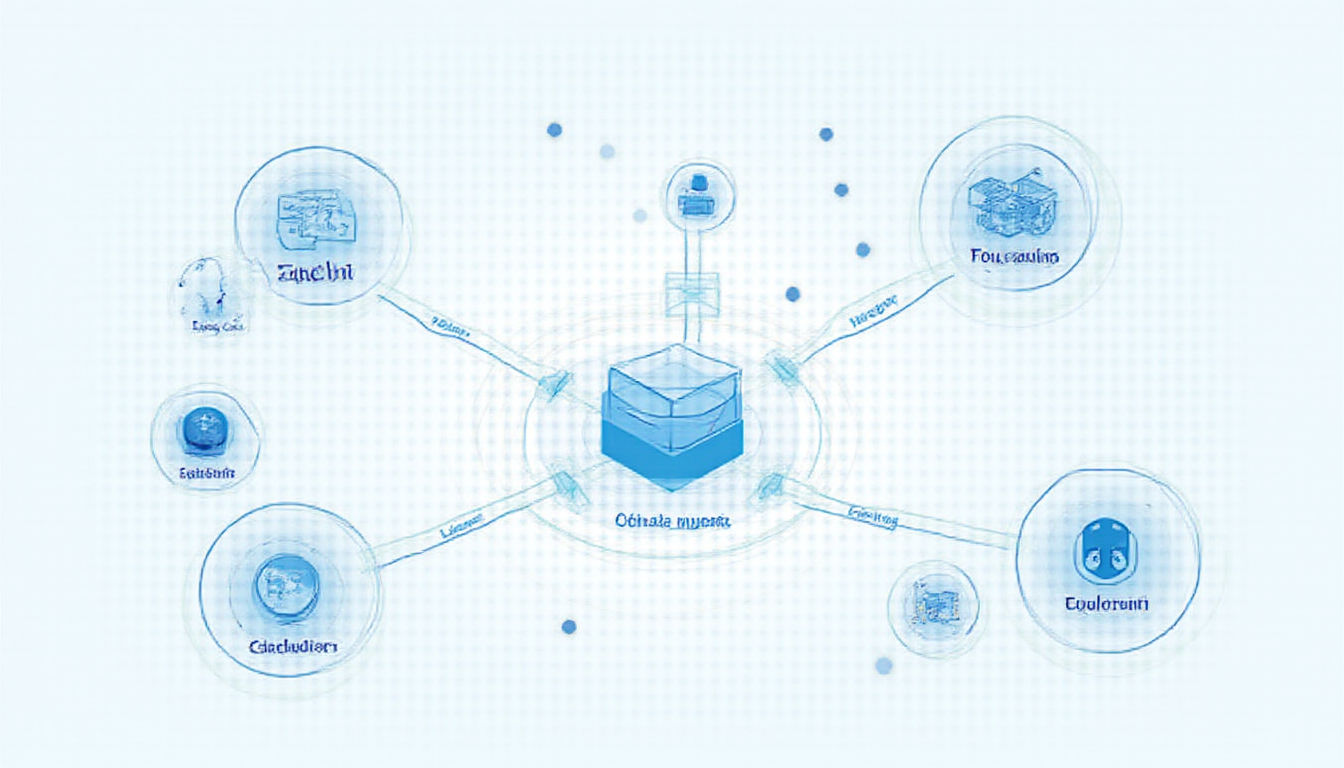
GitAgent addresses this problem head-on with a component-based architecture grounded in a structured directory of human-readable files:
– agent.yaml: Agent metadata and core configuration
– SOUL.md: Defines agent memory design and interface
– DUTIES.md: Specifies agent responsibilities and roles
– skills/, tools/, rules/, memory/: Modular directories organizing capabilities, operational rules, and state management
This declarative format enables an agent to be defined once and adapted anywhere.
The backbone of GitAgent’s innovation is its integration with Git for managing version control and compliance. Git workflows provide human-in-the-loop supervision through pull requests, enabling transparent tracking of all behavior changes. Moreover, GitAgent supports Segregation of Duties (SOD)—a regulatory principle requiring separation of responsibilities to prevent fraud or errors. SOD becomes enforceable in AI agent governance through Git’s branching, reviewing, and merge controls, ensuring adherence to legal frameworks like FINRA or SEC regulations.
In this way, GitAgent unifies disparate AI ecosystems under a consistent, verifiable standard that facilitates both developer productivity and corporate oversight source_article.
Trend
The demand for agent portability has surged amid growing complexity in AI deployments. Enterprises increasingly operate multicloud and hybrid AI stacks, necessitating tools that allow agents to adapt fluidly to different orchestration environments with minimal disruption.
GitAgent’s export CLI is a key enabler of this trend. Commands such as
gitagent export -f [framework_name]
permit developers to effortlessly translate their defined agents into the native formats of multiple frameworks without touching the underlying business logic. This reduces technical debt and accelerates innovation by focusing on agent design rather than integration boilerplate.
For example, a financial services firm can build an agent once, version it safely in Git with oversight, then export it to LangChain for rapid prototyping and later deploy the same agent to Claude Code for enhanced compliance and security. This agility saves countless development hours and mitigates vendor lock-in.
When comparing LangChain vs Claude Code, it’s evident that both frameworks excel in different use cases but require significant rewrites if agents are migrated. GitAgent’s neutral, declarative approach sidesteps this dilemma, making it desirable for heterogeneous AI environments.
This paradigm shift toward framework-agnostic portability is comparable to the early days of containerization in software development, where Docker emerged to eliminate platform-specific dependencies. GitAgent aims to become the “Docker for AI agents,” standardizing their packaging, versioning, and execution across borders and vendors.
In practical terms, this trend signals a move from isolated AI tools to interoperable ecosystems where agents are shareable assets that integrate seamlessly into diverse pipelines. The export CLI is central to operationalizing this vision, ensuring portability does not come at the cost of control or compliance source_article.
Insight
Delving deeper, GitAgent’s innovation lies in the synergy of its structural design and Git-centric governance, enabling true universal agent portability.
The SOUL.md memory design file encapsulates an agent’s cognitive state in a modular, human-readable format. Instead of tightly coupling memory to a specific framework’s abstractions, SOUL.md abstracts memory management into a shareable specification. This modular approach facilitates consistent memory behavior whether the agent runs on LangChain, Claude Code, or any other supported backend, ensuring continuity of context and learning across platforms.
Utilizing Git as a supervision layer introduces an unprecedented level of transparency and auditability. Every change to agent components—whether adding a new skill, altering duties, or modifying rules—is captured as a commit. GitPull requests enforce human-in-the-loop approvals, preventing unauthorized or risky modifications. This control is especially valuable in regulated industries where autonomous agents must adhere to strict controls.
Moreover, GitAgent’s versioning with Git prevents vendor lock-in, allowing organizations to switch agents between frameworks without rewriting code or losing historical context. It’s akin to maintaining source code for software: the agent becomes a first-class artifact in version control, ensuring traceability and rollback capability.
The benefits of agent interoperability extend beyond efficiency. They empower enterprises to create layered compliance controls, optimize hybrid AI workflows, and foster innovation through collaboration. Agents are no longer confined to a single execution environment but become portable, composable units that adapt fluidly to changing technical and regulatory landscapes.
In summary, GitAgent is not just a portability tool but a governance framework for AI agents—a necessary foundation for responsible and scalable autonomous AI deployment.
Forecast
Looking forward, GitAgent is positioned to become a foundational standard in AI agent development. As AI adoption deepens, the complexity and heterogeneity of agent ecosystems will increase, making interoperability indispensable.
We anticipate broad adoption of GitAgent across enterprises seeking to:
– Enhance regulatory compliance through structured version control and Segregation of Duties (SOD)
– Optimize development cycles by leveraging the export CLI to operate across LangChain, Claude Code, and emerging frameworks
– Prevent vendor lock-in and future-proof AI investments by retaining agent source control
As enterprise compliance standards evolve, GitAgent’s Git-supervised workflow aligns well with anticipated requirements for auditability and human oversight in AI operations. Organizations like FINRA and the SEC are likely to recognize such frameworks as benchmarks, driving industry-wide adoption.
GitAgent’s open-source nature will catalyze rich community-driven extensions, including integrations with emerging orchestration platforms and expanded tooling for agent diagnostics and security.
Ultimately, GitAgent is expected to transform AI agent development from fragmented, framework-bound silos into a cohesive, transparent ecosystem where agents are interoperable, auditable, and portable assets — a necessary evolution for sustainable AI at scale.
Next Steps
Developers and organizations eager to capitalize on GitAgent’s benefits can start by:
– Exploring the GitAgent repository and documentation, focusing on agent.yaml, SOUL.md memory design, and modular skills/tools directories.
– Learning agent versioning git best practices to leverage Git workflows for collaborative agent development and regulatory compliance.
– Using the export CLI to transform their agents across different frameworks without rewriting core logic, accelerating cross-platform deployments.
– Contributing to the growing GitAgent open-source community, helping extend integrations and improve compliance features.
Adopting GitAgent at this early stage provides a competitive advantage in developing future-proof, portable AI agents poised for the next generation of AI applications.
In conclusion, the fragmentation of AI agent ecosystems is a significant hurdle that GitAgent decisively overcomes. Seamless agent interoperability is no longer a theoretical ideal but an achievable reality through GitAgent’s framework-agnostic, Git-supervised approach. As autonomous agents become critical enterprise assets, GitAgent’s model will shape the future where AI behaves transparently, portably, and compliantly.
—
Related Articles:
– Meet GitAgent: The Docker for AI Agents Solving Fragmentation Between LangChain, AutoGen, and Claude Code
—
References:
– Marktechpost, \”Meet GitAgent, the Docker for AI Agents That Is Finally Solving the Fragmentation Between LangChain, AutoGen, and Claude Code,\” March 22, 2026.
Available at: https://www.marktechpost.com/2026/03/22/meet-gitagent-the-docker-for-ai-agents-that-is-finally-solving-the-fragmentation-between-langchain-autogen-and-claude-code/
– Michal Sutter et al., GitAgent Project Documentation and CLI tool overview.
—
This article provides a technical perspective on GitAgent agent portability and its potential to unify disparate AI agent frameworks, enhancing interoperability, compliance, and developer productivity.